

What is Accounts Receivable Financing | Definition & Types
Accounts receivable financing, aka receivables financing, enables businesses to unlock cash tied up in outstanding invoices. Know more with our guide to fuel your business growth.
Read more

If you've ever bought a meal from a hawker centre or a new shirt from a local retailer, you've personally contributed to Singapore's Goods and Services Tax (GST). This consumption tax is a fundamental and familiar part of the economic fabric for every consumer in the country. However, for business owners, and particularly for online sellers navigating the dynamic world of e-commerce, this everyday transaction transforms into a critical financial and legal responsibility. The rules can seem complex, especially when your storefront is digital and your customers are global. This definitive guide is designed to cut through the complexity, breaking down everything you, as an online seller, need to know about GST registration, charging, and filing, ensuring you can focus on growing your business with complete compliance and confidence.
At its heart, Singapore's Goods and Services Tax (GST) is a consumption tax. This is the most critical principle for any business owner to understand, it is not a tax on your business's income or profits. Instead, it is a tax levied on the end-consumer for most goods and services they purchase within Singapore. As a business registered for GST, you act as an intermediary, collecting this tax from your customers at the point of sale and subsequently remitting it to the Inland Revenue Authority of Singapore (IRAS). Think of yourself as a collection agent for the tax authority; the financial burden of the tax itself is designed to fall on the final consumer, not on your business's bottom line.
You may have heard the term Value-Added Tax (VAT) used in other countries like the UK, Australia, and across the European Union. It's important to know that GST and VAT are essentially the same concept under different names. Both are broad-based consumption taxes applied to the value added at each stage of the supply chain. Singapore, along with a few other nations like Canada and Malaysia, uses the term "GST," but its fundamental mechanics and purpose are aligned with the VAT systems found elsewhere in the world.
Understanding the fundamental mechanics of GST is crucial for managing your compliance accurately and efficiently. It's a system built on a simple but powerful cycle of collecting and claiming tax.
As of 2024, the standard GST rate in Singapore is 9%. This rate increased from 8% on 1 January 2024, as part of a two-step hike announced by the government to bolster recurring revenues for future needs. It is essential for all businesses to ensure their systems, from shopping carts to invoicing software, are updated to charge this correct rate on all taxable supplies.
The entire GST system for a business owner hinges on two core concepts: Output Tax and Input Tax. Grasping the difference between them is the key to understanding your GST obligations.
This is the GST that you charge your customers on the sale of your goods or services, known as 'taxable supplies'. For example, if you sell a product for $100, you will charge your customer $9 in GST, making the total price $109. This $9 is your output tax, which you collect on behalf of IRAS.
This is the GST that you pay your suppliers on business-related purchases and expenses. This includes GST on raw materials, inventory, professional fees, marketing costs, and even office rent. For instance, if you buy new packaging materials for your online store costing $50, you would pay your supplier $54.50 ($50 + $4.50 GST). This $4.50 is your input tax.
You do not simply hand over all the output tax you've collected to IRAS. Instead, you settle your GST bill by using the fundamental formula:
Output Tax - Input Tax = Net GST Payable to IRAS
This calculation is done at the end of each accounting period (usually quarterly) when you file your GST return.
Let's take a small retail sale as an example. Imagine your e-commerce business sells a handbag for $150.
You charge the customer: $150 + $13.50 GST (9% of $150) = Total $163.50.
The $13.50 is your Output Tax.
Now, to make that handbag, you previously purchased the leather from a supplier for $40.
You paid the supplier: $40 + $3.60 GST = Total $43.60.
The $3.60 is your Input Tax.
Using the formula:
$13.50 (Output Tax) - $3.60 (Input Tax) = $9.90 Net GST Payable
When you file your GST return, you will pay IRAS $9.90 for this specific transaction chain.
There will be accounting periods where your business purchases (input tax) exceed your sales (output tax), for instance, if you invest heavily in new equipment or inventory. In this case, the formula results in a negative amount, meaning you have a claimable refund.
Example: If your total Output Tax for the quarter is $1,000 and your total Input Tax is $1,500, the calculation is $1,000 - $1,500 = -$500. This negative amount is your claimable refund. When you file your return, IRAS will process this and pay your business a GST refund of $500. This mechanism ensures that the tax remains a true consumption tax on the end-user and not a cost to your business.
Navigating GST begins with determining if your business is required, or would benefit from, being registered. The rules are split into two main categories: compulsory and voluntary registration, each with distinct criteria and implications.
Your business must register for GST if your taxable turnover exceeds the S$1 million threshold. This applies in two scenarios: One is If your annual taxable turnover at the end of any calendar year (e.g., 2024) exceeds S$1 million. Another one is if you have reasonable grounds to expect that your taxable turnover in the next 12 months will exceed S$1 million. This is common for fast-growing startups or e-commerce businesses that secure a large, anticipated contract.
It is your legal responsibility to monitor your turnover and apply for registration within 30 days of realizing you meet this condition.
Businesses with an annual taxable turnover below S$1 million can choose to register for GST voluntarily. While this adds administrative work, it can be a strategic financial decision for several reasons
The first one is to Claim Input Tax. If your business has significant startup costs, capital expenditures (like high-end computers or warehouse equipment), or ongoing operational expenses, voluntary registration allows you to claim back the GST paid on these purchases. This can improve your cash flow and reduce overall costs.
The second reason is Business-to-Business (B2B) Advantage. If you sell primarily to other GST-registered businesses, your customers will be able to claim back the GST you charge them. Being registered can make your business appear more established and prevent your clients from facing a non-recoverable tax cost, making your services more attractive.
Choosing to register for GST, whether voluntarily or compulsorily, is a serious commitment. You are required to remain registered for at least two years. During this period, you must comply with all responsibilities, including charging GST at the correct rate, maintaining proper business and accounting records, and filing your GST returns punctually every quarter. This 2-year rule ensures that businesses do not register merely to claim a one-time input tax refund on large purchases and then immediately de-register.
It is crucial to understand that not all goods and services are subject to GST. Some are classified as "exempt supplies," meaning you do not charge GST on them. Importantly, if your business only sells exempt supplies, you cannot register for GST and therefore cannot claim any input tax on your purchases. Common examples of exempt supplies in Singapore include financial Services, such as the provision of loans and life insurance, Sale and Lease of Residential Properties, such as the sale and rental of residential homes, and Digital Payment Tokens, such as cryptocurrencies.
If your e-commerce business deals in a mix of taxable and exempt supplies, you may need to apply special rules for claiming input tax, and it is advisable to consult a tax professional.
Once registered, adhering to the filing and payment cycle is your ongoing responsibility. While it may seem daunting, the process is standardized and becomes routine with practice. Here is a breakdown of what to expect.
You will typically be required to file your GST return quarterly, meaning every three months. IRAS assigns specific accounting periods (e.g., Jan-Mar, Apr-Jun, etc.). However, businesses with a strong compliance history may apply for an annual filing option, which simplifies the process but requires making provisional payments throughout the year.
Filing is done electronically through myTax Portal, IRAS's online platform. The return itself is Form GST F5, where you declare your total value of taxable supplies and the corresponding output tax collected, as well as the total input tax you have paid on business purchases. The portal will automatically calculate your net GST payable or refundable based on the figures you provide.
Your GST return and any net tax payable must be submitted and paid within one month from the end of your accounting period. For example, for the Q1 (Jan-Mar) period, your return and payment are due by April 30th. It is critical to meet these deadlines to avoid penalties and late payment charges.
To ease compliance and support specific business models, including e-commerce, IRAS has introduced several key schemes.
If your e-commerce business involves exporting goods out of Singapore, you likely qualify for zero-rating, meaning you charge % GST. The Major Exporter Scheme (MES) simplifies this for high-volume exporters. Approved MES businesses can import goods without paying GST upfront, easing cash flow. For smaller sellers, the standard hand-carried export rules apply, where you can zero-rate the sale if you have proof that the goods were physically transported out of Singapore by your customer or a courier service.
The Tourist Refund Scheme (TRS) allows tourists to claim a refund on the GST paid on goods purchased in Singapore and carried out of the country. As a seller, to offer this, you must be registered for GST and use an approved TRS operator ,like Global Blue or Planet, at your point of sale. This is particularly relevant for e-commerce businesses with a physical showroom or pop-up store.
The Reverse Charge mechanism applies to imported services, not goods. For example, if your online business purchases digital marketing services, software subscriptions, or professional consultancy from an overseas vendor without a Singaporean establishment, the GST treatment changes. Instead of the overseas supplier charging you GST, you must account for the GST yourself. You declare this as both an output tax and an input tax in your return. The net effect is often zero, but it ensures a level playing field between local and foreign service providers. This is a critical rule for online sellers who frequently use overseas digital tools and services.
No, they are fundamentally different taxes. Income Tax is a direct tax levied on your business's net profit (income minus allowable expenses) at the end of the financial year. GST (Goods and Services Tax), on the other hand, is an indirect consumption tax on the spending of the end-consumer. Your business acts as a collector for IRAS; it is not a tax on your company's income. You can be profitable and pay Income Tax without being GST-registered, or be loss-making and still have to charge and remit GST if you are registered.
Failing to register on time is a serious compliance breach. The consequences can include:
IRAS will make your registration effective from the date you were supposed to register.
You will be liable to pay all the GST you should have charged to your customers from that date, calculated based on your sales records.
IRAS imposes a penalty on the amount of GST due, which can be a significant financial burden.
In severe cases, it can lead to legal prosecution. It is always better to be proactive and monitor your turnover closely to avoid these situations.
Not exactly. You can only claim input tax on goods and services that are acquired for the purpose of making your taxable supplies. This is a key distinction. GST claims are explicitly disallowed for personal expenses, medical and personal accident insurance, entertainment expenses, membership fees, and motor car expenses.
Navigating GST can be complex, but you are not alone. The best resources are the Official Source like IRAS Website, which is the most comprehensive and up-to-date resource. It offers e-Tax guides, webinars, and a detailed GST database.
Alternatively, you could also seek professional advice. For tailored guidance, especially for complex situations, like a mix of local and overseas sales, it is highly advisable to consult a qualified accountant or tax advisor. They can ensure your registration, filing, and claims are handled correctly, saving you time and mitigating compliance risks.
Besides, you can contact the IRAS GST helpdesk directly for specific queries.
Mastering your GST obligations is more than just compliance, it's a fundamental step in building a credible, scalable, and financially sound e-commerce business in Singapore. While the rules may seem intricate at first, viewing them as an integral part of your operational framework empowers you to manage cash flow more effectively and make strategic decisions for future growth.
Remember, you are not navigating this journey alone. Choco Up has been a steadfast partner to Singaporean SMEs, providing not just the capital for growth with Upstart but also a thriving community. Having carried out many business partnerships with growing brands, Choco Up has a rich repository of experience and networking resources, offering new entrepreneurs a valuable platform to connect and get more essential business tips from those who have successfully walked the path before. Book a consultation with our experts now!
Grow your business with Choco Up

Accounts receivable financing, aka receivables financing, enables businesses to unlock cash tied up in outstanding invoices. Know more with our guide to fuel your business growth.
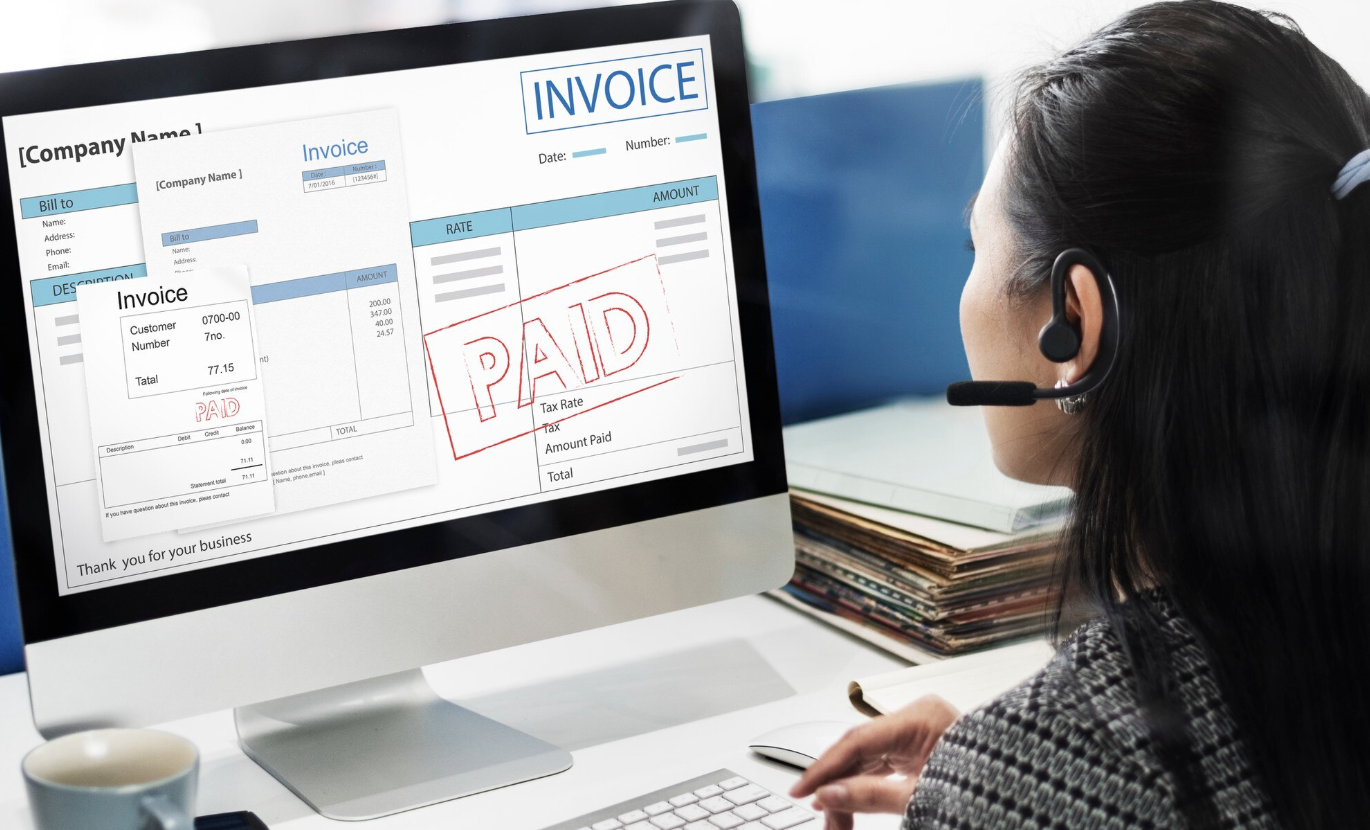
Struggling with overdue payments or outstanding invoices in Singapore? Our definitive guide helps business owners protect cash flow, enforce late payment terms legally, and explore financing solutions like invoice factoring. Get paid what you're owed now!
